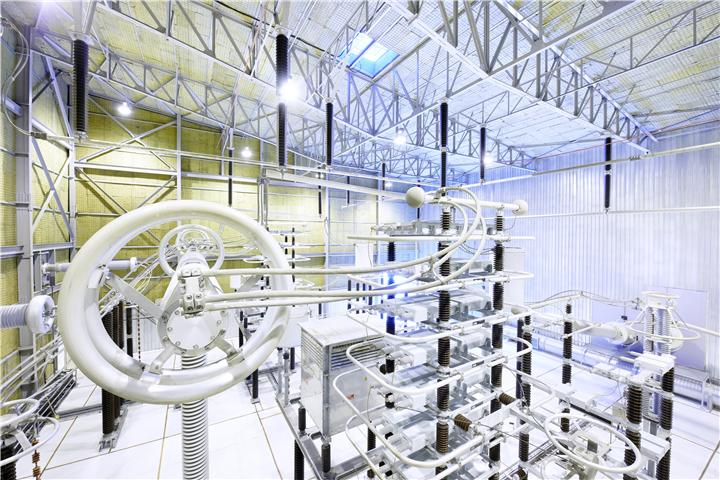
 ABB, a power and automation technology group, has successfully commissioned a power solution that will control the flow of power and enhance grid stability in the State of Michigan, US.
ABB’s low-loss and eco-efficient HVDC Light (high-voltage direct current) technology controls the power flow between the Upper and Lower Peninsulas of Michigan. Furthermore it provides dynamic voltage support, thereby increasing regional grid reliability and also enabling integration of additional wind generation. The HVDC Light station has been commissioned on schedule and handed over to the customer, American Transmission Co. (ATC).
“The Mackinac station is the world’s first HVDC back-to-back system for transmission using voltage source converter technology. This is a milestone demonstrating how ABB can help customers achieve efficient grid control and stabilisation,” said Hanspeter Faessler, head of the Grid Systems business within ABB’s Power Systems division.
ABB designed, supplied and installed the 200 megawatt (MW) back-to-back HVDC Light station in Upper Michigan. An HVDC back-to-back system comprises two HVDC converters connected directly to each other, without any DC transmission line, making it possible to fully control the power transfer through the connection.
The voltage and reactive power control features of the system enable the integration of additional wind energy and stabilisation of the network. Its ‘black-start’ capability allows for fast network restoration using power from the other end of the system in the case of a power outage.
ABB pioneered HVDC transmission technology 60 years ago (read more here) and has built a vast global installed base, having completed almost 100 HVDC projects around the world, with a total transmission capacity of over 95,000 MW. That accounts for about half of the global installed base.