
 The design of a modular wiring system can offer a whole host of advantages in terms of rapid
installation, less labour and a lower skill level needed, flexibility, quality and lower costs. However, Trevor Hapgood of Modular Wiring Systems stresses that for these benefits to be fully realised then the system must be high quality – and he explains what that concept really means
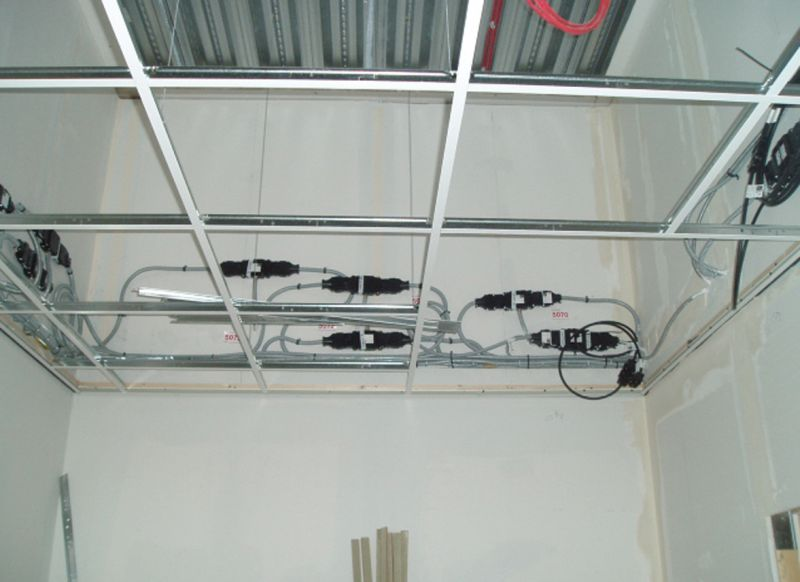
A modular wiring system is essentially the circuit lines of a traditional distribution system. Designed and prefabricated off-site in a plug and play format, when delivered to site, the system requires no hard wiring – every part of the system is connected using colour coded plugs – making it extremely quick and simple to install. The systems are available as radial and ring main up to 32A.
However, selecting a quality modular wiring system is essential if you are to reap the benefits of this modern building practice. So what constitutes quality?
 Cable
Cable
Quality cable is essential as it constitutes around 90% of a modular wiring system. The only way of guaranteeing this is by third party approval through British Approvals Service for Cables (BASEC). Additional considerations include the bending radius and the choice of cable type.
The bending radius of armoured and unarmoured cable should be seven times the diameter of the cable. Anything less than this and the design of the system may be compromised or the cable could become damaged as it is bent beyond its capability.
In terms of choice of cable, a quality modular wiring system will be capable of being designed and manufactured from a range of cable types and armouring to meet the specific site requirements.
Conduit
There are two approaches taken by manufacturers – the first and by far the best involves laying armouring over the cores; the second, and to be avoided, is where the core is threaded through the conduit. The former is better for the bending radius and protection of cores, reducing the chance of damage and allowing for longer lengths. This in turn allows for greater flexibility in the individual system design for a project.
Interlocking parts
If the interlocking parts are poorly designed or made the system may lose connectivity, making it useless. The plugs should have a robust locking mechanism whilst at the same time be easy to connect at installation or refurbishment stage.
Traceability
Traceability in manufacturing has become a major issue in the drive to improve total quality control. However, genuine and valuable traceability practice has to include every component in a system – it can’t simply stop at who manufactured the cable as that has very little value and in reality tells you nothing of the system quality.
A top notch manufacturer will be able to trace each and every system component. Modular Wiring Systems can trace all the way back not just to the cable, but to the source of copper within that cable. It’s therefore easier as Modular Wiring Systems’ parent company, Tratos, manufactures all of the cables used in its systems in its BASEC approved factory.
Testing
Each and every component part – including the copper, the cable, the joins etc – should be tested individually, preferably using ATE (automatic testing equipment) that is fully calibrated. Systems that have undergone such rigorous testing are easy to identify as the manufacturer applies a test sticker with a serial number to every part of the system tested. Batch testing of a system and its components is not acceptable.
Manufacturer support
A good, experienced manufacturer should be able to provide you with support and guidance throughout a project to ensure you get the most benefit from using a modular wiring system. That support should include detailed CAD drawings, the allocation of an in-house project engineer for one point of contact throughout the process, and the ability to make bespoke product to solve any on-site challenges that may arise. The latter aspect can only realistically be achieved if the company has UK manufacturing facilities – as to design, build and supply a bespoke item from abroad is unlikely to meet tight time frames.
With greater focus than ever before being placed on sustainability and ‘green’ building techniques, at the same time as a need to reduce costs, modular wiring systems score high. Wastage is reduced as there is no requirement for cutting and fabrication on-site and costs are reduced as a system can be installed up to 80% quicker than traditional methods and utilising 70% less labour. However, this only applies to a well designed system, manufactured under strict control using quality components. Use a lesser system that scrimps on components, testing etc, and you might get away with it. However, the more likely scenario is that more time and money will be spent to put it right whilst generating a whole lot of bad will in the process.
Modular Wiring Systems
T: 01753 566 700