 Electrical enclosures come in a myriad of materials – each offering there own benefits – so deciding which is best for your application can be difficult. Here, Chris Lloyd of Spelsberg offers some advice
The term ‘electrical enclosure’ is incredibly broad, so to complement the scope of possible applications, there is a huge amount of choice in the availability of materials when specifying an enclosure. Initially this can seem daunting, but with the correct guidance it is quick and simple to find an enclosure that is suitable for almost any job.
The most fundamental choice is also the simplest – metal vs plastic. While metal enclosures certainly have their place when it comes to applications that require extremely high impact resistance or explosion protection, most applications require a combination of ingress protection, ease of installation, cable retention, impact protection, UV protection, cost effectiveness and aesthetics. With these considerations in mind, the options afforded by the plastic variations on the market are where most choices will come from today.
Assuming that your application is included with the majority that is best suited to a plastic enclosure, the next step is to choose the material type. It is at this stage that decisions become more personal and it is important to understand the different strengths and characteristics of each option.
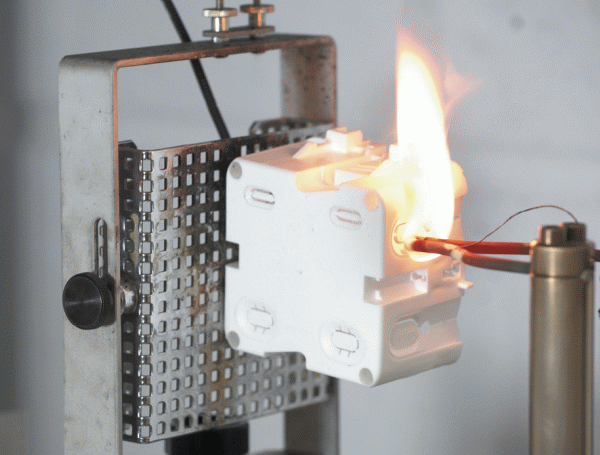 Of the choices available, the four most common that best cover the range of protection requirements are PVC – a cheaper option, that is often used for low end, small junction boxes; polystyrene – suitable for most internal applications with medium impact requirements and up to IP68 ingress protection; polycarbonate – a tough material that can withstand substantial knocks, offers UV protection and up to IP68 ingress protection; and GRP (glass reinforced polyester) – a robust material that is suited to extremely harsh industrial environments and which can be manufactured with UV stabilisers for outdoor use.
PVC – does budget have its place?
PVC is one of the most widely produced plastics in the world, because of its low cost and the ease with which it can be worked. It is therefore found towards the budget end of the enclosure spectrum and is typically used in smaller junction boxes which are used to house terminal blocks and connectors. The cost of PVC enclosures means that they are an attractive proposition for budget conscious contractors. However, the downside is that PVC (or polyvinyl chloride), contains chlorine, one of a group of elements known as halogens which, when they burn, release highly toxic dioxins – a type of chemical that is known to increase the likelihood of cancer as well as reproductive, developmental and immune problems. These dioxins can slowly bleed into the atmosphere as the PVC breaks down from exposure to UV light and are also released when exposed to fire. While EU legislation has long banned a number of halogens (such as PBB and PBDE) it is yet to clamp down on PVC.
Polystyrene vs polycarbonate
Both these materials are free of harmful halogens and, while polystyrene is typically the least expensive, both materials are strong enough to withstand knocks and provide high cable retention and IP68 protection when used in conjunction with suitable cable glands or a gelling compound. They can both be easily worked to produce aesthetic enclosures and most cable entry options can be accommodated.
However, the two materials differ when it comes to external applications. Polycarbonate offers a far higher level of UV protection than polystyrene which makes it the ideal material for external applications, or applications exposed to direct sunlight. Polycarbonate also has far greater resistance to high, or fluctuating, operating temperatures, plus a higher impact resistance.
In some applications, especially industrial environments, enclosures need to be able to withstand more than submersion in water, exposure to sunlight and occasional knocks. They may be subjected to corrosive environments (such as sea air) or chemicals (such as cleaning agents), vibrations and extreme temperatures.
In these instances the most suitable type of enclosure is one constructed from GRP. These offer a high level of rigidity at minimal thickness, equating to increased protection from impact in a lightweight, aesthetic design.
Conclusion
There is a wide range of applications where an electrical enclosure may be necessary, and each presents different challenges and different environments from which to provide protection. Manufacturers have invested heavily in developing different material technologies to make sure that each customer can specify an enclosure that is cost effective and ideally suited to the environment in which it will be placed.
Of course the list of materials mentioned is by no means exhaustive – they have been selected as a representative group that demonstrates how, beneath a similar surface, there can be stark contrasts between performance capabilities. There are many highly specialised materials, that have not been mentioned, that are designed for extreme environments and offer protection levels beyond the capabilities of the materials mentioned here, but these are only necessary for a minority of speciality applications.
As with all electrical equipment, it is important that you consult an expert before specifying enclosures for your application. All reputable manufacturers and distributors should provide technical support that can answer questions on halogens, resistance capabilities and material comparisons.
Spelsberg
T: 01952 200 716