Guest Post
Patrick Faulkner, Lead Engineer at Accu, addresses common questions about grub screws and explains how their design influences performance characteristics
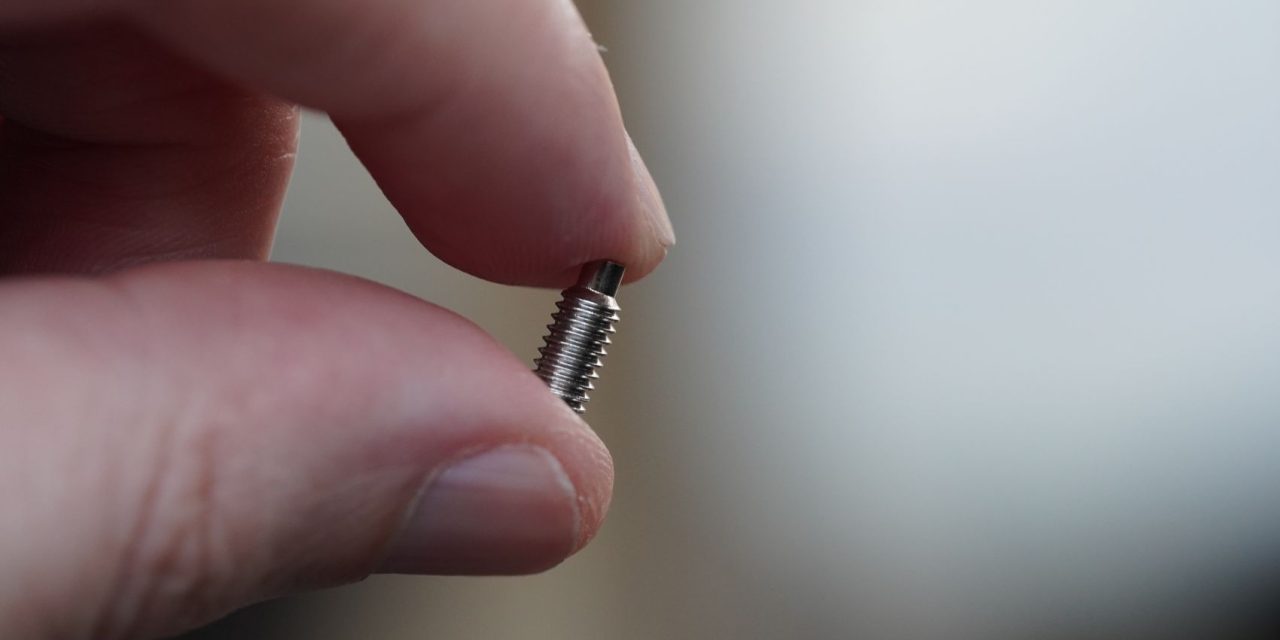
“Grub Screws are a type of fastener which is fully threaded and used to secure one component to another without the use of a nut. Often referred to as a type of set screws, grub screws are made up of a simple cylindrical body and a recessed drive, with no visible head. This design means they sit flush within the material, making them the ideal fastener for applications where a smooth surface is preferred. This design makes grub screws particularly effective for securing components on rotating shafts or within compact assemblies where space is limited.
Unlike a standard bolt, which holds components together through axial clamping force, a grub screw provides radial holding power by applying tip pressure directly to the shaft, holding the gear securely in place. This eliminates the need for nuts and prevents slippage during rotation.
To prevent grub screws from loosening over time, use a grub screw which can be tightened with a Torx driver or Allen key for better torque resistance.
What are grub screws used for?
Grub screws are primarily used to securely join components or materials together, especially in applications where a traditional nut and bolt would disrupt a clean or compact design. They are widely used in machinery, automotive and furniture assemblies due to their ability to provide strong and discreet fastening.
 In electrical engineering, grub screws play a crucial role in securing small components where space is limited and vibration resistance is essential. They help prevent movement and loosening in light fixtures and electrical devices. Made from corrosion-resistant materials, grub screws offer improved durability in environments exposed to moisture or fluctuating temperatures, ensuring reliable performance in electrical applications over time.
Understanding grub screw terminology
Grub screws come in several tip styles, each designed for specific applications and holding requirements. Understanding these variations helps in selecting the most effective type for different assemblies.
Tip style cheat sheet:
Cup Point = General-purpose option.
Cone Point = Provides maximum bite into a dimple.
Flat Point = Best used on a prepared flat surface
Nylon or Soft Tip – Protects delicate surfaces and offers the lowest holding force.
What are the different types of grub screws?
Cone point tip grub screws are ideal for exerting additional force when joining softer materials together. They deliver the strongest mechanical lock as their pointed tip penetrates the mating material, concentrating force at a single spot for maximum holding power. A cup point grub screw, which features a hollowed rim, bites into the material, spreading the load over a broader grip, providing great grip while causing less penetration.
 Knurled point grub screws are similar to cup point grub screws in their tip but feature a serrated end for additional friction and grip. This increases surface friction and creates a mechanical interlock, helping the screw to stay firmly in place even under persistent vibration.
Where accuracy is a priority, dog point grub screws, which feature a full-diameter cylindrical tip to fit neatly into a drilled hole, are used. This design protects the threads from shear, making them ideal for applications that require disassembly and reassembly. A spring-loaded ball grub screw design features a small ball bearing with a spring to provide smooth and controlled pressure against the matting surface. This design not only allows for smooth adjustments but also compensates for wear over time, ensuring reliable alignment across repeated use.
With a flat-point grub screw, the end opposite the head makes a simple flush contact between the parts joined, ideal for securing components to flat surfaces. This type of grub screw is best for applications where protecting the surface is important, preventing deeper material penetration.
What is the difference between nylon and brass grub screws?
Both brass tipped or nylon tipped grub screws provide great holding power while reducing the risk of scratches, dents or scarring on materials.
Brass tipped grub screws have a softer and non-sparking tip, which makes them ideal for use on flat materials, shafts or other mating parts. Under load, the brass deforms slightly, spreading out the pressure and helping to prevent scratches or gouges on the contact surface. Whereas nylon grub screws compress and cold flow under pressure, allowing them to adapt to variations in the surface and distribute force evenly. Nylon tipped grub screws provide a compliant and cushioned contact, which makes them a great choice when delicate surfaces need protection and when a wider range of clamping pressures is required.
Understanding the full capabilities of grub screws allows engineers to choose the most suitable fastener for each application. By recognising the difference between various grub screw tip types, they can select the ideal option to meet specific project requirements.
For more information, visit: https://www.accu.co.uk/
To read more from Electrical Engineering, visit our NEWS page