In modern electrical engineering, switchgear cabinets are essential components that ensure safe control, protection, and distribution of electrical energy
From industrial manufacturing plants to infrastructure and EPC projects, these cabinets form the interface between power generation, transformation and final consumption.
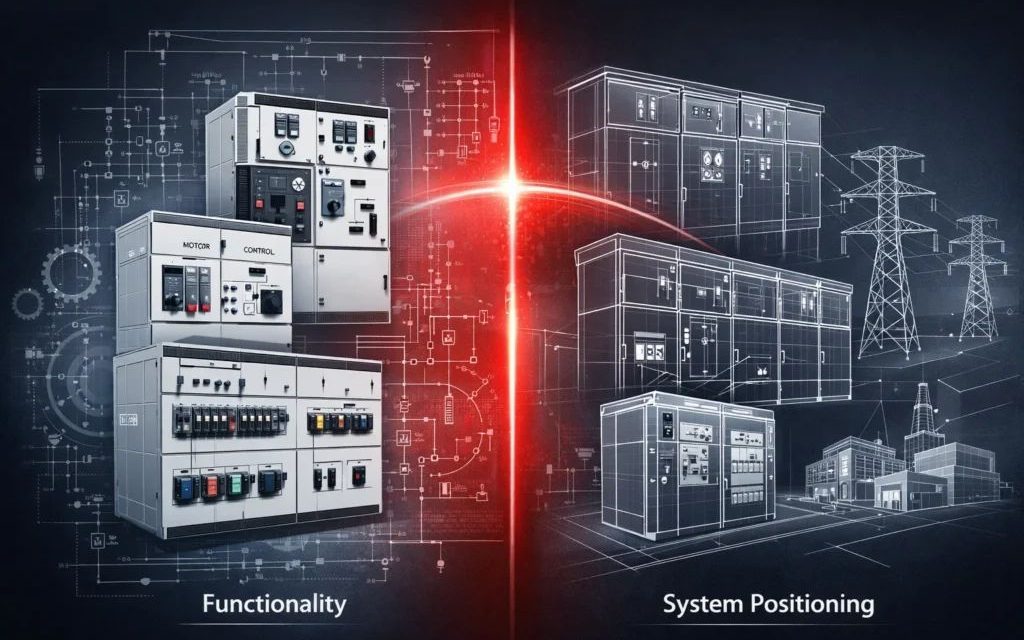
Proper classification and system positioning of switchgear cabinets is critical for ensuring reliability, operational safety and efficient system coordination.
At Shanghai Risentric, switchgear systems are engineered and customised for global EPC requirements across LV, MV and HV applications.
LOW VOLTAGE (LV) SWITCHGEAR CABINETS
LV switchgear cabinets are widely used in industrial and commercial power distribution systems operating below 1kV.
Common Types:
- Main Distribution Boards (MDB)
- Motor Control Centers (MCC)
- ATS / AMF Panels
- Power Distribution Boards (PDB)
Functional Role:
- Final power distribution to end loads
- Motor control and automation
- Backup power switching (generator/utility)
System Positioning:
LV cabinets are located at the downstream level of the power system, directly supplying equipment and terminal loads.
MEDIUM VOLTAGE (MV) SWITCHGEAR CABINETS
MV switchgear operates typically between 1kV and 36kV and is used in primary distribution systems.
Common Types:
- Metal-clad switchgear
- Ring Main Units (RMU)
- Vacuum circuit breaker panels
Functional Role:
- Primary power distribution
- Protection of transformers and feeders
- Isolation and fault interruption
System Positioning:
MV switchgear sits between transmission systems and LV distribution networks, acting as a critical control and protection layer.
HIGH VOLTAGE (HV) SWITCHGEAR CABINETS
HV switchgear is used in transmission-level applications above 36kV.
Common Types:
- Gas Insulated Switchgear (GIS)
- Air Insulated Switchgear (AIS)
- Substation breaker systems
Functional Role:
- Transmission network control
- Grid stability and protection
- High-capacity fault interruption
System Positioning:
HV switchgear forms the backbone of national and regional power grids, connecting generation plants to transmission networks.
FUNCTIONAL CLASSIFICATION OF SWITCHGEAR CABINETS
Beyond voltage level, switchgear cabinets can also be classified by function:
Protection Cabinets
Designed to isolate faults and protect equipment using circuit breakers and relays.
Control Cabinets
Used for automation, PLC integration, and process control.
Power Distribution Cabinets
Responsible for allocating electrical energy to different loads.
Automation & Intelligent Cabinets
Integrated with SCADA systems for real-time monitoring and remote control.
SYSTEM INTEGRATION IN EPC PROJECTS
In EPC industrial projects, switchgear cabinets are not standalone units but part of an integrated power system including:
- Transformers
- UPS systems
- ATS/AMF backup systems
- PLC control panels
- Renewable energy systems (solar + BESS)
Proper system coordination ensures:
- Load balancing
- Fault isolation
- Operational continuity
- Energy efficiency
ENGINEERING CONSIDERATIONS
Key design factors include:
- IEC 61439 compliance for LV assemblies
- Short-circuit withstand capability
- Thermal management and ventilation design
- IP protection rating for environmental conditions
- Busbar sizing and material selection
These parameters ensure long-term reliability and safe operation under industrial conditions.
Electrical switchgear cabinets play a critical role in modern power systems, from low-voltage distribution to high-voltage transmission networks. Their classification by voltage level and function ensures efficient system design, safety, and operational reliability.
As industrial automation, renewable energy, and EPC infrastructure continue to evolve, advanced switchgear engineering remains essential for building resilient and intelligent power networks worldwide.
For more information, visit LV/MV/HV Switchgear Manufacturer | IEC Standard | Risentric
To read more from Electrical Engineering, visit our NEWS page