

Manufacturers are under pressure to increase throughput, minimise downtime and integrate increasingly sophisticated electrical equipment into existing operations, while ensuring systems can be brought online quickly following installation or upgrades
As equipment becomes more complex, successful commissioning increasingly depends on the quality of the work carried out during project scoping, stakeholder coordination, system design and manufacture, rather than activities carried out during final testing on site.
“Customers aren’t just looking for a system that works,” explains Coleman. “They’re looking for a solution that can be integrated, commissioned and brought into production with minimal disruption, supporting smoother ramp-up. For us, this means successful commissioning starts well before equipment reaches the site.”
Laying the groundwork
Modern electrical systems can combine control panels, drives, motors, protection devices, sensors and control hardware from multiple suppliers, creating interfaces that must be correctly specified, assembled and validated from the initial RFQ and system design stages through to Factory Acceptance Testing (FAT).
 Preparation is, therefore, one of the most important factors in commissioning success. Component selection, validation, FAT, collaborative planning and early integration testing help to identify problems before equipment reaches site, while practical factors such as site readiness, available utilities and competing contractors can also influence commissioning timelines.
Errors introduced during manufacture may only become apparent during FAT or site commissioning, where identifying and correcting them is considerably more disruptive than preventing them during assembly.
Removing risk
Software and controls are often a focus of commissioning discussions as electrical equipment becomes more connected, but the physical design, quality of the build and assembly processes remain equally important. Even the most advanced control architecture cannot compensate for inconsistent assembly processes or avoidable variation introduced during manufacture.
“You can have the best software in the world, but if the machine has been badly designed or poorly built, those issues will still appear during commissioning,” says Coleman. “The objective is to remove as much uncertainty as possible before the system reaches site.”
Commissioning performance can, therefore, be influenced by decisions made much earlier on the factory floor. Consistent assembly, verification of critical operations and records showing that work has been completed correctly can all reduce the number of unknowns remaining when equipment reaches site. Instead of discovering whether equipment has been manufactured as intended during commissioning, engineers can concentrate on confirming its performance within the wider installation.
This approach surfaces risks earlier in design, assembly and validation, giving manufacturers greater confidence before equipment progresses through FAT and reaches site.
Improving consistency
As electrical equipment becomes more complex, manufacturers are increasingly looking for technologies that help control process variability, improve traceability and ensure critical assembly operations are completed as intended. The focus is moving beyond productivity alone, with manufacturers seeking greater repeatability, process adherence and digital records of critical operations.
“Many manufacturers are operating with increasingly unskilled and flexible workforces while also introducing more complex products and production processes,” says Ball. “In this environment, relying solely on tribal knowledge becomes an impossible approach. Digital process control helps ensure critical information is embedded within the process itself.”
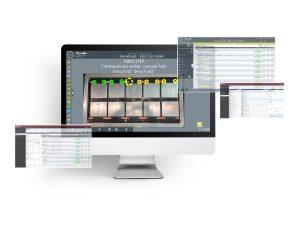
Technologies such as Desoutter’s Pivotware process control system help manufacturers embed quality checks into assembly workflows. By guiding operators through the correct sequence and providing visibility into completed operations, these solutions help reduce variation and improve repeatability.
For manufacturers assembling electrical equipment, this can provide greater assurance that defined processes have been followed before a completed unit progresses to testing and eventually leaves the factory.
The need to adapt without losing consistency is most visible when subtle differences between products require different assembly processes. Without clear process controls, those distinctions may not be immediately apparent to operators.
“We’ve worked with manufacturers where visually identical products require different assembly processes. Without built-in process control, it’s very easy for mistakes to occur,” says Ball. “By using solutions such as Pivotware to identify the product and present the correct workflow, manufacturers can reduce reliance on operator memory while improving first-time quality and process consistency.”
Proving equipment readiness
“Commissioning should become less about troubleshooting and more about validation,” concludes Coleman. “If everyone involved has worked together from the outset, managed risk effectively and maintained high standards throughout design, assembly and integration, commissioning becomes the final confirmation that the system is ready for production.”
“Commissioning confidence starts long before the system arrives,” adds Ball. “If the right process has been built in from day one, commissioning isn’t a leap of faith, it’s just confirming what you already know to be true.”
If commissioning becomes a validation exercise rather than troubleshooting, electrical equipment can be installed and brought online with greater certainty and fewer unexpected delays. Achieving that depends on reducing variability at source through robust project management, controlled assembly, testing and traceability long before equipment reaches site.
For more information, visit www.desouttertools.com
By Grace Ball, Projects Supervisor UK&I, Desoutter Tools ad Phil Coleman, Business Development Manager, adi Lean Manufacturing & Design


