FIBOX’s Steve Gallon explains how enclosure manufacturers are meeting the growing demands of OEMs
The UK enclosures industry has changed out of all proportion during the last 30 years. Back in those days GRP was seen as an expensive alternative, specified by the large water and utility companies. Similarly, the use of wall mounted plastic enclosures was basically limited to electrical contractors looking for the cheapest box, with PVC being the material of choice and invariably purchased from an electrical wholesaler.
Although the sheet steel enclosure industry remains strong, the emergence of high grade thermoplastic enclosures as viable alternatives has completely changed the landscape of the industry.
These days there are a number of different factors that need to be taken into account before specifying an enclosure for any given application, such as environmental considerations which are now a high priority. And, in most cases, these decisions are made by a committee consisting of representatives from different disciplines within the company – the value chain.
More than just a box
Original equipment manufacturers (OEMs) now demand far more from the enclosures they specify, which means that for the companies that manufacture them, a complete package of products and services must be offered if the OEMs are to be served as efficiently as possible.
In the past the stigma relating to anything plastic proved restrictive. The perception was that if it was steel it was strong and would last. Recently the horrors of PVC have been exposed by the ROSH Directive but back then it was a case of Hobson’s choice. However, nowadays, high grade materials such as polycarbonate and ABS are readily available to design and R&D engineers who are looking for more than just a box. IP, flammability and temperature ratings, UV stabilisation, resistance to corrosion and ROHS compliance top the list of requirements.
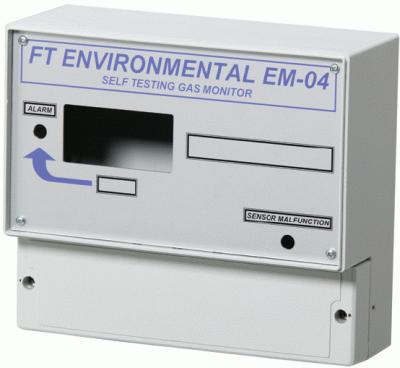 The recent recession hit electrical and electronic manufacturing hard and cutbacks have seen many companies looking to their enclosure suppliers to provide more than just the enclosure. Therefore, to succeed the supplier must be able to provide a comprehensive customising service, often to tight deadlines. From a simple hole for a cable gland or pushbutton to highly complex milling, corporate colours and graphics, internal bracketry and fixings, all these and much more are now the norm in the decision process of design and R&D engineers.
A major influence in the ‘value chain’ of OEM companies is their marketing department. Today, the aesthetics of an enclosure solution have never been so important. Many companies manufacture families of products and being able to standardise on a single enclosure design in various sizes is of great importance. So to succeed, enclosure suppliers must be able to satisfy this requirement from their standard product portfolio. Variety of choice is key.
Bespoke solutions
Of course Murphy’s Law dictates that however many options are available, there will always be a requirement which cannot be fulfilled from a standard range. By using modern tooling techniques a few enclosure companies offer the possibility of developing bespoke enclosure solutions which are viable in terms of cost and delivery lead times.
Two key factors taken into account by the specifiers’ ‘value chain’ relate to their production process. Many companies operate a JIT system – therefore confidence in their suppliers’ ability to deliver is crucial. Running alongside this is the issue of quality. Modern injection moulding techniques virtually guarantee continuity in the quality of the products being produced. A couple of manufacturers even use robots to inject molten gasket material into their enclosures to guarantee consistent quality. The result of all of this is no disruption to the client’s production due to QA rejections.
As with many other areas of the electrical and electronics manufacturing industry, the enclosures sector has not been spared from the insurgence of copycat products from the Far East. However, looks, and more importantly promises, can be deceptive. The old adage of ‘you get what you pay for’ undoubtedly pertains, but as previously explained, there is so much more to specifying a fit for purpose enclosure than just asking for the box.
The future
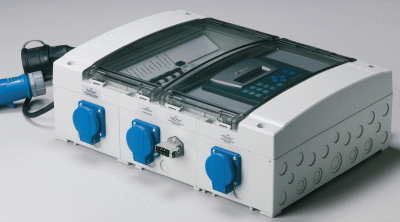 So what does the future hold for the UK thermoplastic enclosure industry? Well, only those manufacturers that are ready willing and able to invest heavily in market driven product development, state of the art production technology, local in-depth stocks and employee development will be equipped to offer the sort of first class customer service being demanded by the market. And as a consequence, only these manufacturers will prosper.
In addition, let us not ignore the importance that quality distribution plays in the strategy of leading enclosure manufacturers. Reliance on local stock and trained sales personnel is crucial to the future of the industry and once again, only those producers willing to invest quality time and resources in maintaining a proactive distributor network will be able to serve the diverse enclosure buying market.