During a review of its operations at its Barton plant, Kimberly-Clark realised that by continuing the careful management of its lift trucks, and the Hawker batteries from EnerSys that power them, it could extend its existing contract rather than having to purchase new equipment
Kimberly-Clark’s Humberside plant manufactures the company’s range of Huggies disposable nappies as well as paper-based materials for some of the company’s other production sites in Europe and Africa.
Materials handling operations are split between two parts of the site – one managed by Kimberly-Clark and the other by its supply chain partner Unipart Logistics. All of the trucks are owned by Kimberly-Clark and many were delivered in 2003 with the remainder arriving during 2005. Since then the fleet has remained largely the same although production, and hence handling operations, have increased significantly.
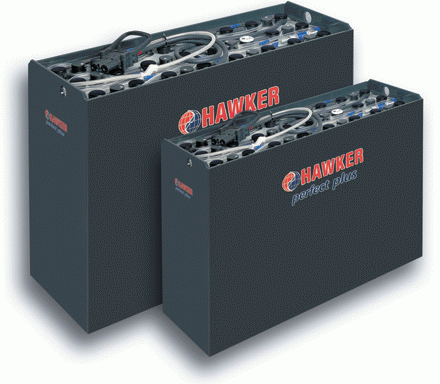
The Barton plant was one of the first to be equipped with Hawker LifePlus and Powertech high frequency chargers and this has helped the batteries to achieve their long service life. The chargers are matched to the batteries and automatically detect the level of discharge and supply only the amount of power needed – and no more – to restore full charge. This means less mains power is required and there is reduced risk of the overcharging that can lead to degraded battery performance and premature failures. Both types of charger automatically accommodate batteries of different capacities and are easily programmable for all battery technologies. This makes them well suited for sites like Barton with its mix of counterbalance and reach trucks, order pickers and pallet transporters.
When the equipment was originally delivered trucks and batteries were rotated regularly between the two warehouses to ensure none became overused at the expense of others. Over time it became clear that the same objective could be achieved by rotating the trucks but keeping the batteries in the same locations.
A review of operations
The original contract was coming to an end in 2010 and Kimberly-Clark needed to review its operations. Although cost conscious, the company needed to be confident that its materials handling operations could support the demanding production schedules. The partners understood that the trucks could continue working but they needed to be sure of the batteries.
“We’d had very little truck downtime and they were still giving us nine hours use,” said Claire Hambling, supply chain coordinator at Kimberly-Clark. “We knew the combination of trucks and batteries and wanted to show that extending the contract was best.” The alternative was to specify a completely new set of materials handling equipment, and although some of the potential suppliers presented proposals that offered lower initial outlay, Kimberly-Clark recognised that operating costs across the lifetime of the contract were more important.
Hambling continued, “Before making a change you need to be confident it will work. But we have confidence in the people from EnerSys and when we looked at the figures we could see that continuing with the same trucks and batteries made sense.”
 Effective management
The first objective was to provide a measurable way to check if the batteries were being overcharged or overly discharged because both relate directly to their performance and long term viability. Kimberly-Clark introduced regular, random checks across the entire set of batteries by retrieving information stored inside the chargers and assigned each battery a red, amber or green designation based on its level of discharge. The data was put on a spreadsheet so that it could be assessed and tracked more easily.
The figures revealed that there was potential to reduce the number of ‘red’ batteries and increase the number of ‘green’. From this came a revised standard operating procedure which Kimberly-Clark devised in conjunction with its supply chain partner that could be applied in both operations. In addition, EnerSys provided additional training to show warehouse staff when and how to charge the batteries.
Two key changes were made to the way the batteries are used. First, batteries are now checked and topped regularly as part of a proper process, thus lowering the risk of overcharging and damaging a fully topped battery. Secondly, fixed charging was introduced. This means a driver must bring the truck in for a battery change at a specific time irrespective of the amount of discharge. This significantly increased the number of batteries classified as ‘green’ within the first week.
Each truck was originally supplied with three batteries to support rotation during round-the-clock production. Batteries are changed using an overhead gantry crane which transfers the depleted unit to a vacant charging position before replacing it with a fully charged unit.
The various parties regularly meet to iron out any issues and specialists are brought in whenever needed. For example, soon after the contract was extended some of the trucks started to under perform. At first this appeared to be related to the batteries but by analysing information retrieved from the chargers, EnerSys showed that batteries and trucks were performing correctly. This led the team to identify the correct cause (which was the trucks’ safety cut-out devices supplied by a third party), and remedy the problem quickly.
EnerSys
T: 0161 727 3800