Leading cable cleat manufacturer, Ellis says the incorrect interpretation of short-circuit test reports is leading to inappropriate cleats being specified and installed The company’s MD, Richard Shaw talks to Electrical Engineering about a situation that is putting vital electrical installations and lives at unnecessary risk.
“The role of cable cleats in any electrical cable installation is of paramount importance. They are there to prevent costly and dangerous damage to cables and those around them in short circuit situations – in fact the only thing underspecified cleats do in a short circuit situation is add to the shrapnel.
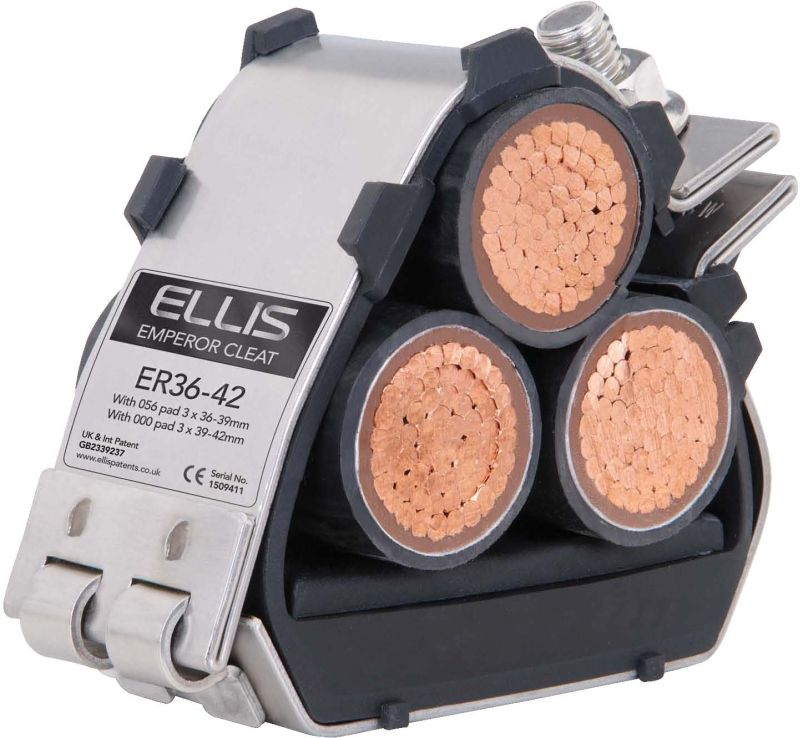 Historically, this message, despite its hard-hitting nature, has never been fully appreciated and so rather than being treated as an integral part of an electrical installation, cleats have often been lumped in with electrical sundries and seen as fair game for cost-cutting.
This mindset has slowly changed over the years, thanks in no small part to the introduction of regulations governing the use of cleats (EN50368 / IEC61914), but there is still a long way to go before the finishing line even comes into sight.
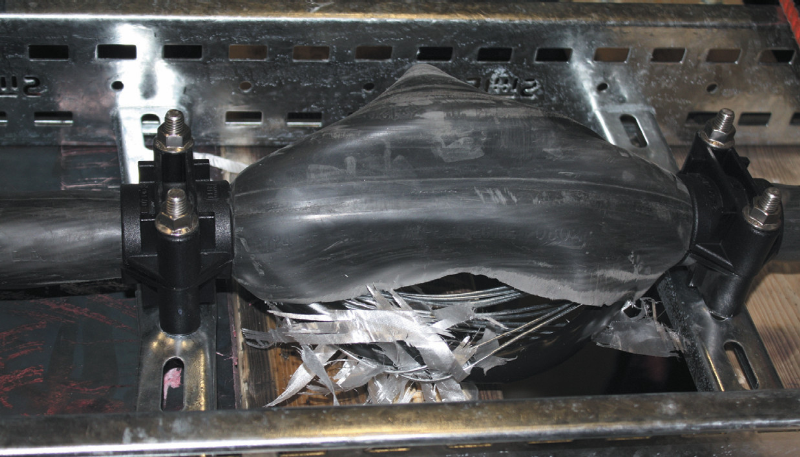 Ironically, one of the issues currently clouding the picture is something I have long championed as a tool for resolving the problem. That is, the use of third party short circuit testing to prove a cleats’ suitability for a particular installation.
Third party short-circuit testing is the only way to effectively prove a cleat does what it claims to and is something we carry out as standard on any new product. In the past, I would have said its widespread adoption would have cleared the cleat picture up once and for all. But today, it seems that isn’t enough to resolve things.
Firstly, there’s the fact that when looked at closely some cleats simply aren’t what they claim to be. Sometimes this can be down to issues surrounding manufacture, but more often than not it’s short-circuit withstand claims that simply don’t stand-up to scrutiny, which means the cleats are likely to be wholly unsuitable for installations they claim to be designed for.
And then there are the issues generated by the reports of properly tested products. Short circuit reports in general tend to be lengthy, in-depth documents and so a lot of people will be tempted to quickly refer to the headline figure rather than properly reviewing the entire document.
The danger with this is that some will take it to mean that the products tested deliver the same level of short-circuit withstand irrespective of the installation. For example, the headline figure may say a specific cable cleat has a short circuit withstand of 150kA, but this needs to be backed up with a qualifying statement that puts it into context – something say along the lines that the cleat has a short-circuit withstand of 150kA when securing 43mm cable in trefoil at 300mm centres.”
Shaw highlights a recent report he was given that showed a product withstanding a peak short-circuit of 138kA, but that on full reading it became clear that the test rig was set up with four trefoil circuits in parallel and that, under these circumstances, although the overall fault level was 138kA, each of the four trefoil groups only saw a quarter of the fault, equivalent to 34.5kA.
“Worryingly, the example is just one of many and the moral of this story is clear – don’t judge a short circuit test report by its cover,” he continued.
The story clearly highlights the need for third party test reports to be carefully analysed prior to being acted upon. Of course, this puts the onus on the specifier or contractor to do this work, but as a leading manufacturer we feel we should play a far more active role in ensuring correct specification of our products.
In order to correctly interpret a report those with specification responsibility should ask two simple questions. Firstly, is the product tested the same as the product being offered? And secondly, is the test installation similar to the project installation? For example, a test of three single conductor cables in parallel secured with single cable cleats cannot be compared with a trefoil installation secured with trefoil cleats.
This can all then be backed up by calculating the forces experienced by the cleat during the test and comparing it with the anticipated force the nominated cleat would see in the proposed installation.
Admittedly, this sounds very complex and many will breathe a sigh of relief when they hear there is an easier way round it.
Project specific testing removes the opportunity for any misunderstanding by testing a particular product to ensure it can stand up to the requirements of a specific project. This is third party testing at its most extreme, and at present it’s the only way to deliver an absolute guarantee that the cleat being installed is suitable for the installation.
Ellis prides itself on the extensive third party testing it puts all of its products through prior to taking them to market and the fact that they will always agree to project specific testing to secure an order. For more information on the company, its products and services visit www.ellispatents.co.uk or call +44(0)1944 758395.